Launched at the UN General Assembly in September 2019, the SDG3 Global Action Plan (SDG3 GAP) coordinates 13 multilateral health, development, and humanitarian agencies around seven accelerators. Co-led by WHO and UNICEF, the Primary Health Care Accelerator (PHC-A) aligns donor financing behind country-owned packages such as Papua New Guinea's 24/7 subnational PHC network.
Primary citation: UNICEF EAPRO PHC Landscape Analysis (2023, p. 146 fn. 644) and 2021 SDG3 GAP Deep Dive.
1. Thirteen-Agency Coordination Under the PHC Accelerator
Fragmented donor reporting drains scarce ministry of health capacity in low- and middle-income countries. The SDG3 Global Action Plan for Healthy Lives and Well-being for All (SDG3 GAP) brings together 13 international agencies under seven cross-cutting accelerators: primary health care (PHC-A), sustainable financing, community and civil society engagement, determinants of health, innovative programming in fragile settings, research and development, and data and digital health.
Jointly steered by the WHO Special Programme on Primary Health Care and UNICEF, PHC-A concentrates on replacing vertical disease-specific grants with unified national primary care investment plans. Supplementary funding from Germany's Federal Ministry for Economic Cooperation and Development (BMZ) catalyzed intensified joint alignment across 13 focus countries.
SDG3 GAP Country Alignment & 24/7 PHC Readiness Calculator
Assess how agency plan consolidation, facility operating hours, and pooled financing shift subnational readiness.
SDG3 GAP Alignment Score: 58%
Comparable to PNG Provincial Health Authority expansion; lock in BMZ-style flexible financing for rural 24/7 clinics.
2. Papua New Guinea: Provincial Health Authorities & 24/7 PHC
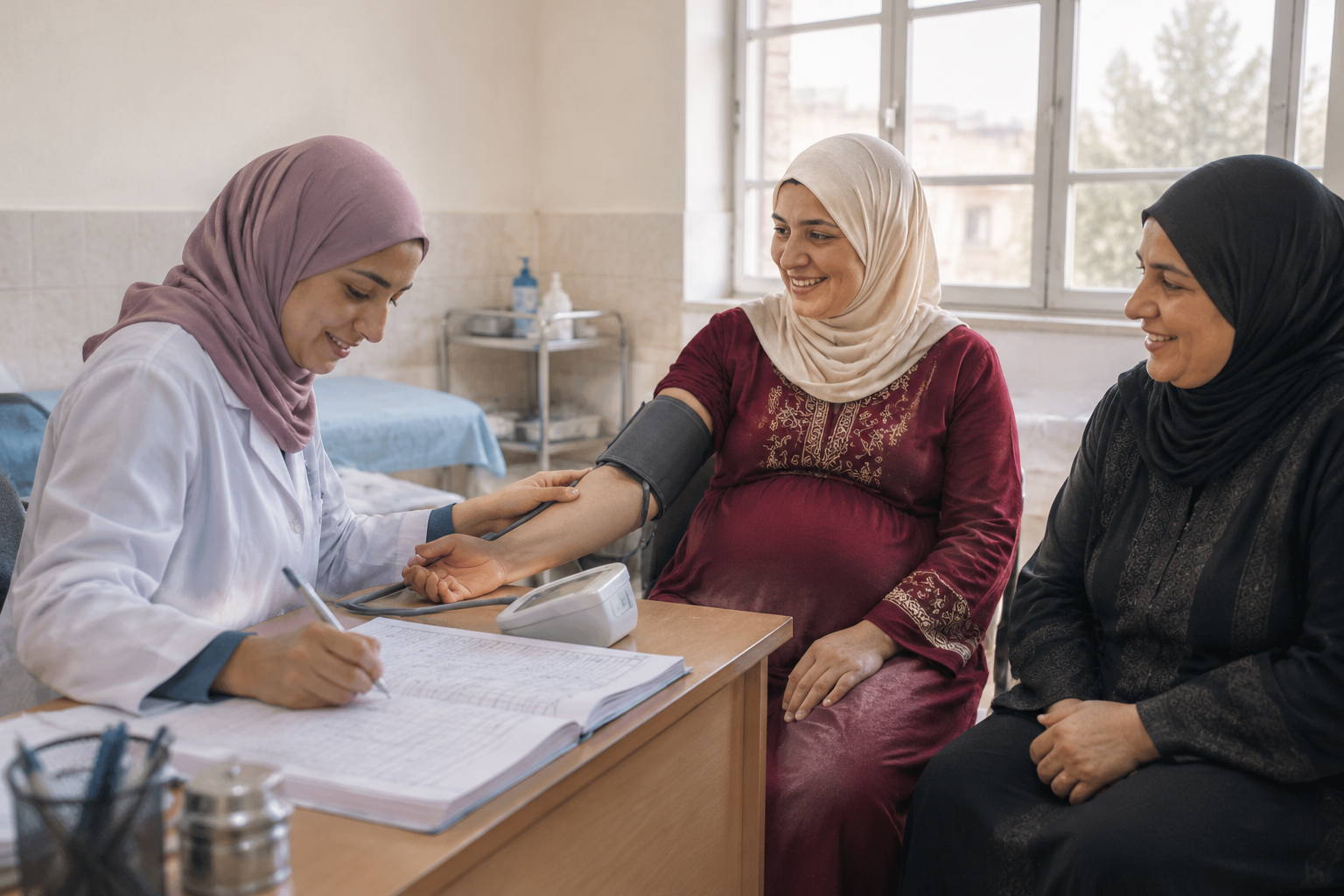
As documented in UNICEF's 2023 East Asia and Pacific PHC Landscape Analysis (p. 146, footnote 644), Papua New Guinea leveraged SDG3 GAP alignment to update its National Health Plan UHC primary service package and reinforce Provincial Health Authorities (PHAs). Focus areas centered on expanding 24/7 primary care availability across Local Government Areas (LGAs), stabilizing rural nurse-midwife staffing, and harmonizing immunization and maternal-child supply chains.
3. SDG3 GAP Accelerators & Partner Alignment Table
| Accelerator / Country Track | Co-Lead / Implementing Mechanism | Scope | Operational Focus |
|---|---|---|---|
| Primary Health Care (PHC-A) | WHO Special Programme on PHC & UNICEF | 13 countries | Joint country workplans & unified service packages |
| BMZ Supplementary Track | German Federal Ministry supplementary grant | 13-state cohort | Catalytic flexible funding for subnational PHC |
| Papua New Guinea (PHA) | Provincial Health Authorities & LGA clinics | 24/7 PHC target | UHC service-package update & maternal availability |
| Sustainable Financing | Multilateral development banks & health ministries | 7 accelerators | Domestic fiscal space & OOP protection |
Archival Citation: 2021 Deep Dive on SDG3 GAP (UNICEF EAPRO fn. 644)
Preserves verified records from Deep Dive on SDG3 GAP (pp. 9-12, 2021), cited in UNICEF East Asia & Pacific PHC Landscape Analysis (2023, p. 146 fn. 644): 13 multilateral agencies under the September 2019 SDG3 GAP, seven accelerators led by the WHO-UNICEF Primary Health Care Accelerator (PHC-A), BMZ supplementary support across 13 countries, and Papua New Guinea Provincial Health Authority 24/7 PHC package modernization.