Strengthening primary health care in conflict-affected settings requires replacing short-cycle humanitarian projects with multi-year sector recovery plans anchored in an essential package of health and nutrition services. In South Sudan, where core workforce density sits at 7.6 per 10,000 against the 44.5 norm, integrated primary care bridges emergency relief and resilient system delivery.
Primary evidence: Olu et al. (2023, BMJ Glob Health, PMC10410921) and South Sudan HSSRP (2020-2022).
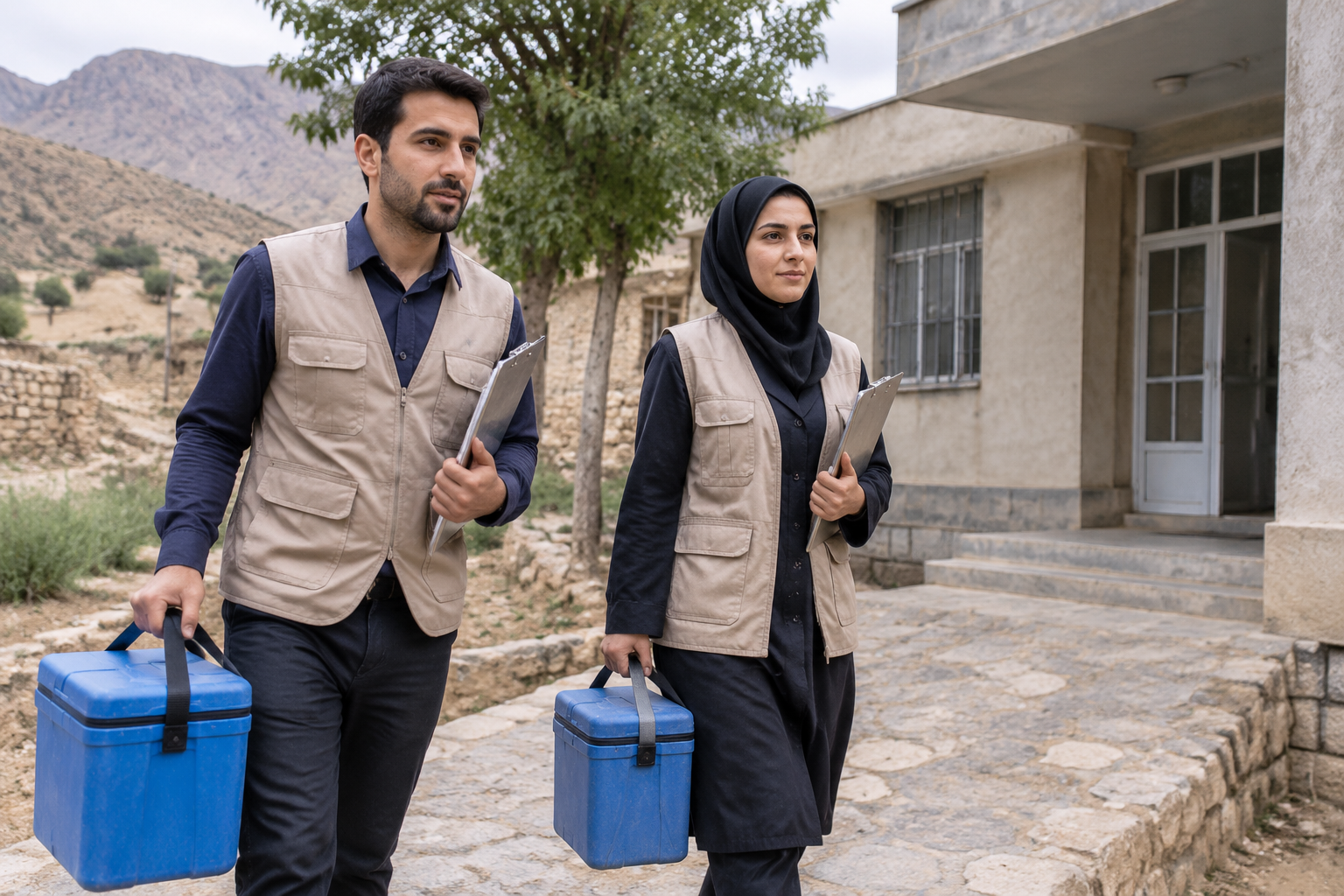
1. Structural Access & Workforce Deficits in Protracted Crises
Protracted humanitarian crises compress fiscal space and fracture service delivery between NGO-run emergency posts and underfunded public clinics. Across South Sudan's population of roughly 11 million, baseline indicators prior to sector stabilization revealed severe geographic and clinical access bottlenecks: only 44% of residents lived within 5 km of a functional health facility, only 68% of mapped facilities remained operational, and public domestic allocation to health averaged roughly 1% of government expenditure.
Demographic and mortality outcomes reflect those structural gaps directly. Life expectancy at birth stood at 53 years for men and 55 years for women, accompanied by a maternal mortality ratio of 789 per 100,000 live births, an infant mortality rate of 75 per 1,000 live births, and an under-five mortality rate of 106 per 1,000 live births. Core health worker density stood at 7.6 per 10,000 population, less than one-fifth of the 44.5 per 10,000 minimum threshold required for SDG primary health coverage.
Fragile-System HDD Transition Readiness Calculator
Adjust workforce density, 5 km geographic access, and domestic health budget share to evaluate transition readiness from acute humanitarian relief to consolidated primary care.
HSSRP Readiness Index: 24 / 100
Workforce and budget require BPHNS contracting plus community health worker surge.
2. Bridging the Humanitarian-Development Divide (HSSRP & BPHNS)
To prevent parallel humanitarian clinics from eroding public health governance, the Health Sector Stabilization and Recovery Plan (HSSRP, 2020-2022) established a US$ 2.8 billion multi-year framework centered on the Basic Package of Health and Nutrition Services (BPHNS) and the community-anchored Boma Health Initiative.
Operational stabilization concentrated on four priority states: Jonglei, Western Bahr el Ghazal, Eastern Equatoria, and Central Equatoria. Concrete interventions combined frontline deployment (training approximately 400 community surveillance and health workers) with referral infrastructure rehabilitation at Juba Teaching Hospital and its dedicated infectious disease ward, proving that emergency outbreak readiness and long-term PHC investments reinforce each other rather than competing for funds.
3. Fragile-Setting Indicators & 2025-2026 Policy Benchmarks
| Health System Metric | 2020 Baseline | International Benchmark | Stabilization Mechanism |
|---|---|---|---|
| Core Health Workforce Density | 7.6 / 10,000 | 44.5 / 10,000 | Boma Health Initiative & mid-level cadre retention |
| Population Within 5 km Access | 44% | ≥ 80% | Mobile primary outreach & rehab of closed clinics |
| Operational Health Facilities | 68% | ≥ 95% | Pooled HSSRP multi-year operating grants |
| Maternal Mortality Ratio (MMR) | 789 / 100k | < 70 / 100k (SDG) | Basic emergency obstetric care in BPHNS clinics |
| Under-5 / Infant Mortality | 106 / 75 per 1k | ≤ 25 / 1k | Integrated community case management & cold chain |
| Sector Stabilization Budget | US$ 2.8B (HSSRP) | 15% Abuja Target | Humanitarian-development pooled transition funds |
4. Operational Design Rules for 2025-2026 Conflict Transitions
- Protect single-tier service packages: Align NGO emergency stipends and public salary scales inside one district BPHNS roster so skilled nurses do not abandon public primary clinics.
- Pre-position chronic & infectious cold chain: Embed solar cold-chain hubs at state hospitals like Juba Teaching Hospital to stabilize vaccination and insulin buffers during supply interruptions.
- Link household risk audits to transition grants: Pair facility rehabilitation with SDG 3.8.2 financial protection tracking so user fees do not return when emergency relief contracts expire.
Archival Citation Fulfillment: 2020 Conflict-Affected PHC Deep Dive (South Sudan HSSRP)
Preserves verified citations for the 2020 report Deep Dive: PHC intensified support in conflict-affected countries (pp. 65-68, ISBN 9789240041660), referenced by NIH PMC10410921 (Olu et al., 2023) and the WHO UHC-P Primary Health Care portal. Core data: South Sudan population ~11M, life expectancy 53m/55f, MMR 789/100,000, IMR 75/1,000, U5MR 106/1,000, 44% within 5 km, 68% operational facilities, 7.6 vs 44.5/10,000 workforce, ~1% government health budget, US$ 2.8B HSSRP (2020-2022), BPHNS, Boma Health Initiative, 400 community surveillance workers, Juba Teaching Hospital rehabilitation across Jonglei, Western Bahr el Ghazal, Eastern Equatoria, and Central Equatoria.